At Ability Adventures, travel is designed through a functional and deeply human lens. Every journey considers physical, sensory, and cognitive needs together — not in isolation — so travellers can experience New Zealand with confidence, comfort, and genuine freedom.
At the centre of this approach is Sandie Grant, whose unusual path into tourism combines decades of clinical healthcare experience with a lifelong love of New Zealand’s landscapes.
Sandie Grant | Passionate about showcasing NZ for travellers with disabilities
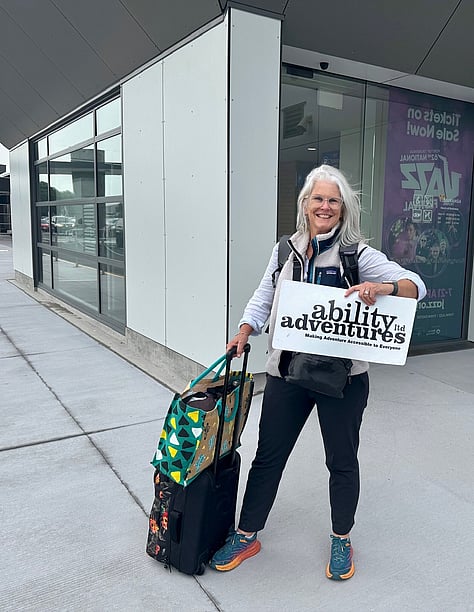
Origins & Calling
Sandie Grant’s journey into tourism began early. At just 19, she started guiding for her cousin, Marina Hanger, the original founder of Ability Adventures. At the time, Marina co-owned one of New Zealand’s early eco-tourism companies specialising in nature tours and special-interest holidays centred around birding, flora, and fauna.
Marina soon recognised a gap in the tourism sector: travellers with disabilities were largely underserved. In 2008, she established Ability Adventures to address that need.
Years later, when Marina retired in 2024, Sandie stepped in to carry the company forward. With a background in occupational therapy and years of guiding experience, acquiring Ability Adventures felt like a natural continuation of work she had already been doing in different forms for decades.
What first drew Sandie to guiding still remains at the heart of her work today: helping people truly see New Zealand. Not simply travelling through landscapes, but noticing the details of a forest, understanding wildlife, and connecting with the stories of a place.
Those early years revealed something enduring: meaningful travel is about connection — to land, to people, and to experience.
Marina Hanger | Founder of Ability Adventures
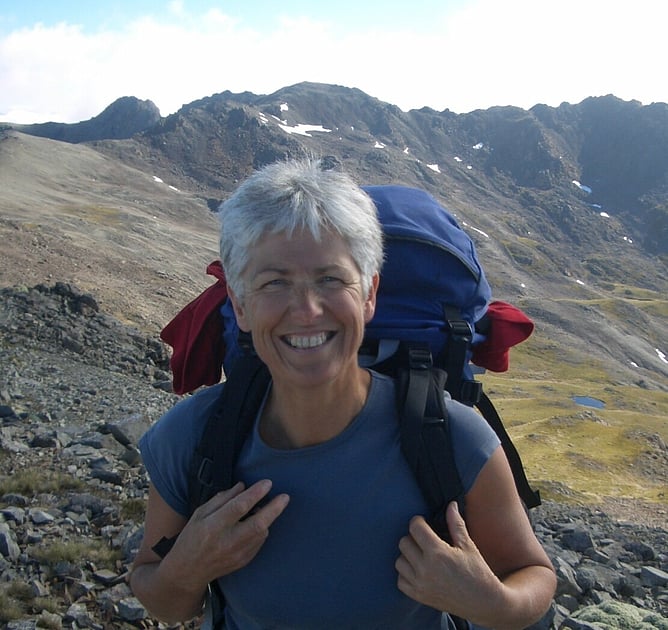
Where Clinical Expertise Meets Exploration
Alongside her tourism background, Sandie’s clinical career as an occupational therapist profoundly shaped the way she understands travel.
Much of her work focused on wheelchair and seating therapy, helping people navigate daily life more comfortably and confidently. Over time, she realised that travel presents many of the same practical considerations.
Freedom, she explains, is rarely abstract.
It’s whether someone can comfortably board a boat to see whales, move easily through accommodation, manage fatigue during a full day of sightseeing, or participate in a cultural experience without worrying about logistics.
This clinical perspective brings a quiet layer of foresight to every itinerary. Factors such as pacing, terrain, seating, transport access, sensory environments, and rest opportunities are all carefully considered before guests even arrive.
When these details are thoughtfully planned, travellers can simply enjoy the experience itself — watching whales off Kaikōura, seeing little blue penguins return to shore at dusk, exploring geothermal landscapes in Rotorua, cruising through the fiords, or stepping into the cinematic magic of Hobbiton.
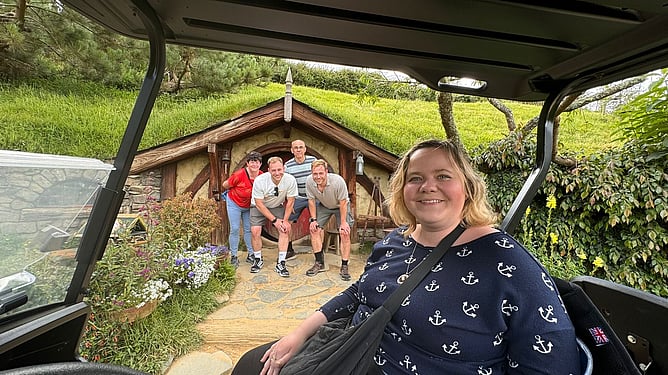
A Defining Moment
One journey in particular confirmed for Sandie that accessible travel was more than a service gap — it was a calling.
The trip was a bespoke ten-day South Island itinerary for a couple where one partner had multiple sclerosis and travelled with a mobility scooter. Together they explored the lower South Island, staying in accessible accommodation and visiting some of the country’s most remarkable landscapes.
The experience felt completely natural. Small adjustments ensured everything flowed smoothly, allowing the couple to focus on discovery rather than obstacles.
“It wasn’t about highlighting difference,” she recalls. “It was about ensuring they didn’t miss out.”
That journey crystallised the direction forward — combining her love of New Zealand with a deep understanding of diverse needs, all centred around curiosity, enjoyment, and shared experience.
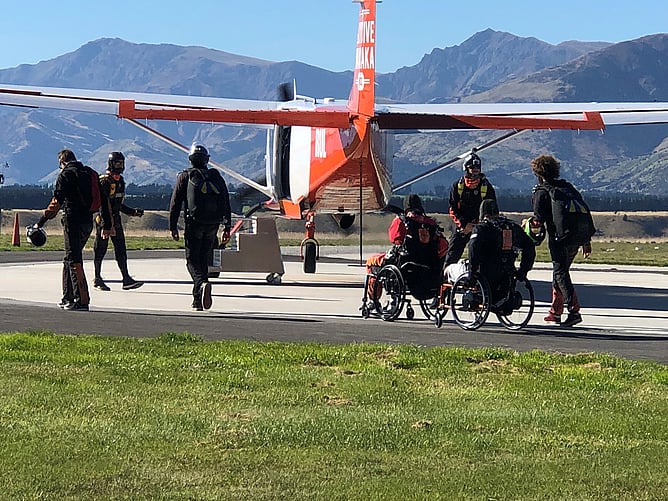
Designing Travel Differently
Today, Sandie designs Ability Adventures itineraries through a holistic and highly practical lens.
Accessibility is not treated as a simple checklist. Instead, each journey considers how travellers interact with environments throughout the day — from transferring in and out of vehicles to energy levels, rest opportunities, and the real usability of accommodation.
A hotel room may be labelled “accessible,” but that doesn’t necessarily guarantee comfort or dignity. Factors such as layout, proximity to amenities, lighting, noise levels, and even the outlook from a room can shape the experience.
Often the solutions are subtle: selecting the right room within a property, adjusting pacing, confirming details directly with providers, or anticipating needs well in advance.
Accessibility, she notes, rarely requires dramatic changes. More often, it comes down to thoughtful planning and attention to detail.
Trust as the Foundation
Planning travel with specific requirements naturally involves more conversation and care. For Sandie, building trust with clients is therefore fundamental.
Her clinical background allows these conversations to happen openly and practically. Guests don’t need to minimise or over-explain their needs; together they simply discuss what works best and design a journey accordingly.
Sandie also understands that real life continues while travelling. Equipment may need adjustment, wheelchair parts can loosen, and essential medical supplies may require replacing.
Through strong local networks and healthcare knowledge, solutions can often be arranged quickly — from organising repairs to sourcing replacement parts or even securing a temporary power wheelchair at short notice.
Knowing that support is available if something unexpected happens gives guests enormous reassurance. With that confidence in place, they can focus on enjoying New Zealand.
Ability Adventures & Aotearoa
New Zealand offers extraordinary diversity — geothermal landscapes, ancient forests, rugged coastlines, dramatic fiords, unique wildlife, and rich Māori culture.
For Sandie, opening these experiences to more travellers means removing unnecessary barriers while respecting the land and the communities that care for it.
The goal is not to change these places, but to ensure more people can experience their richness.
Exploration should feel empowering rather than overwhelming. Through careful preparation and thoughtful pacing, guests feel supported without feeling over-managed.
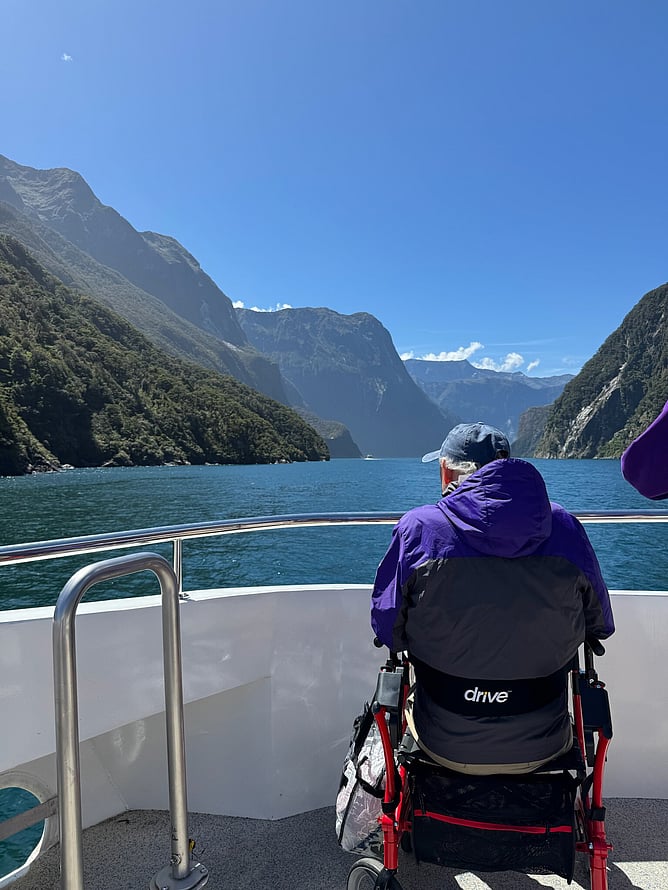
When travellers realise they can comfortably access a wildlife encounter, cruise through Milford Sound, or take part in a cultural experience without worrying about logistics, confidence grows naturally.
Lived Experience, Not Just Designed Access
Sandie’s thinking is also shaped by travelling New Zealand with her own family.
Many of their holidays involve exploring the country by campervan, though they are just as happy staying in cabins or hotels. What matters most is being outdoors — discovering birdlife, coastlines, forests, and the quieter corners of Aotearoa.
Travelling as a guest keeps her perspective grounded. She notices the small details: how welcoming a place feels, how easily spaces can be navigated, and whether a day’s activities flow naturally.
These observations feed directly into how Ability Adventures journeys are designed.
Ultimately, travellers seek comfort, connection, and memorable moments — spotting native birds, watching changing landscapes, or waking somewhere peaceful. Sandie believes these simple experiences are what make travel truly meaningful.
The Bigger Picture
Sandie often speaks about the difference between technically accessible travel and emotionally accessible travel.
Technically accessible travel meets physical requirements.
Emotionally accessible travel is when someone feels comfortable, respected, and fully at ease — no longer needing to constantly calculate whether something will work for them.
True inclusion happens when travellers stop thinking about accessibility altogether and simply enjoy the moment.
Working closely with disabled travellers has reinforced one universal truth: people value agency and choice. They want to decide where they go, what they experience, and how they explore the world.